

Best Things to Do Near Nishiki Market in Kyoto
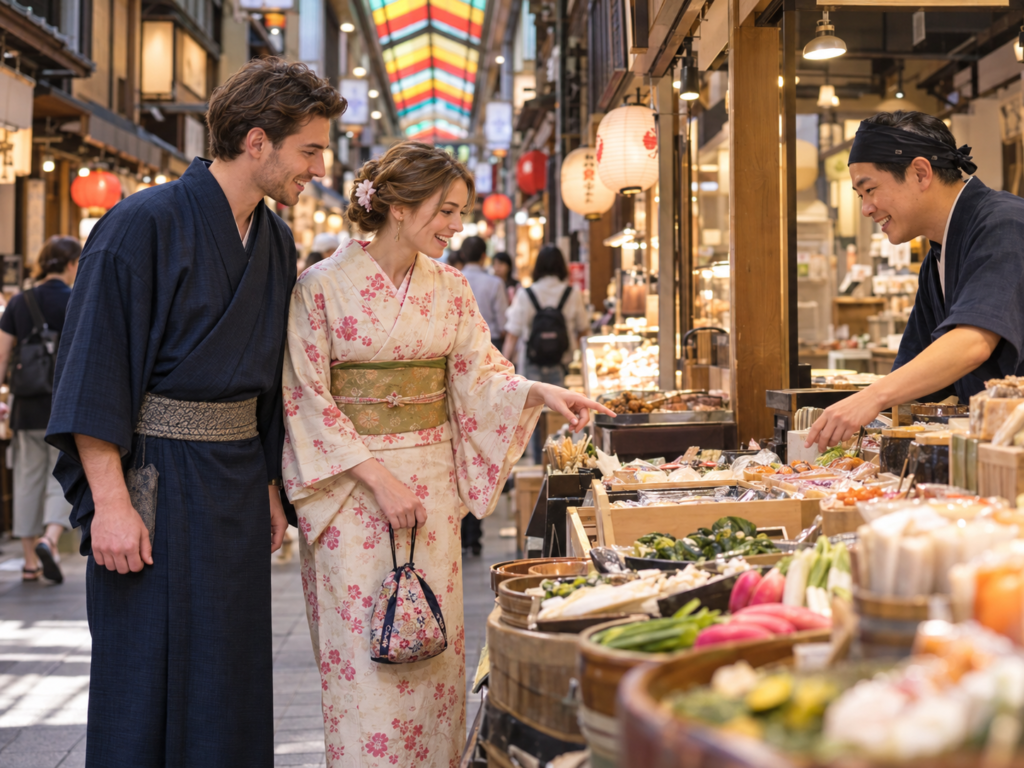
Nishiki Market is one of the best places to experience the flavors and everyday culture of Kyoto. However, the market is only one part of a much larger neighborhood filled with historic shrines, covered shopping streets, traditional townhouses and hands-on cultural experiences.
If you are wondering what to do near Nishiki Market, you do not need to travel across the city. Many of central Kyoto’s most enjoyable attractions are within walking distance, making the area ideal for a half-day itinerary.
You can taste local specialties in the market, visit a small shrine, explore traditional and modern shops, wear a kimono and take part in a tea ceremony—all without spending much of the day on transportation.
This guide introduces the best things to do near Nishiki Market and shows you how to combine them into an easy central Kyoto itinerary.
Want to explore Nishiki Market with local guidance?
Nishiki Orizuruya offers a kimono dressing, authentic tea ceremony and an English-guided walk around Nishiki Market in one experience.
View the Tea Ceremony and Nishiki Market Walking Tour
Best things to do near Nishiki Market at a glance
If you have only a few hours, these are the main places and experiences to consider:
- Explore the food shops of Nishiki Market
- Visit Nishiki Tenmangu Shrine
- Walk through Shinkyogoku Shopping Street
- Browse the shops and cafés of Teramachi
- Experience tea ceremony and kimono at Nishiki Orizuruya
- Visit Rokkakudo Temple
- Discover Japanese pop culture at the Kyoto International Manga Museum
Most visitors can combine four or five of these stops in half a day. Your best route will depend on whether you are more interested in food, shopping, history or Japanese culture.
1. Explore Nishiki Market
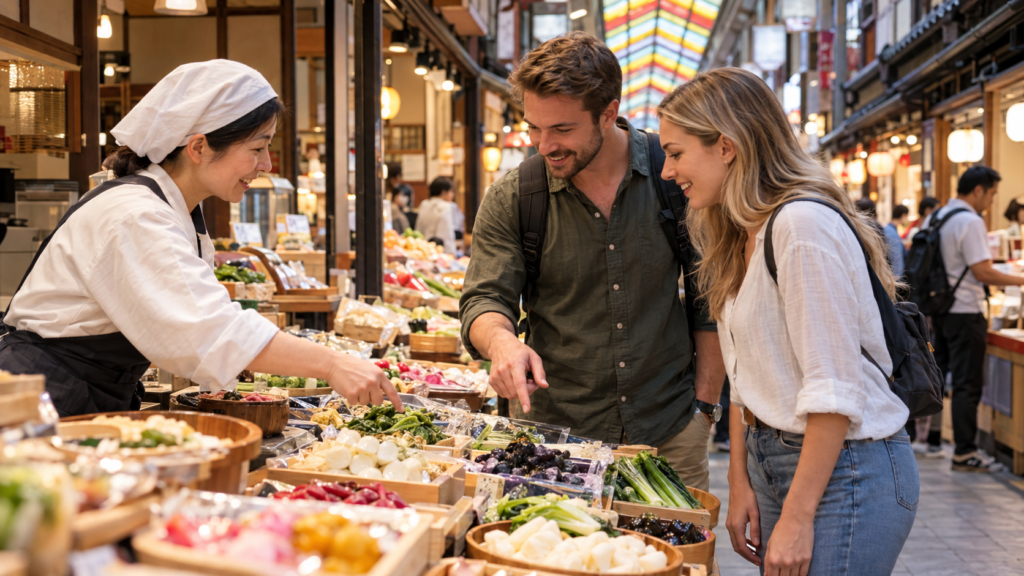
Known as “Kyoto’s Kitchen,” Nishiki Market is a narrow covered shopping street in the heart of the city. The market extends for approximately 390 meters and contains around 130 shops selling seafood, vegetables, pickles, tea, sweets, knives and other Kyoto specialties.
It is not simply a street-food destination. Many businesses in the market specialize in ingredients used in Kyoto cuisine, making Nishiki an excellent place to learn how the city’s food culture developed.
Popular foods and products include:
- Kyoto-style pickled vegetables
- Dashimaki tamago, a rolled omelet made with dashi
- Fresh and grilled seafood
- Matcha sweets
- Japanese tea
- Yuba, or tofu skin
- Seasonal wagashi sweets
- Spices and cooking utensils
Rather than trying to eat everything, choose a few foods that are especially connected to Kyoto. Seasonal products are often more interesting than items designed mainly for photographs.
Allow approximately 60 to 90 minutes for a relaxed visit. The market can become crowded, so walking slowly and remaining aware of other visitors is important.
Individual shops set their own opening hours and closing days. The market does not have a single schedule that applies to every business, and many shops close on Wednesdays. Check the official Nishiki Market information if a particular shop is important to your visit.
Nishiki Market etiquette
Nishiki Market remains a working shopping street, not an outdoor restaurant. A few simple habits make the experience more comfortable for everyone:
- Eat food beside or directly in front of the shop where you bought it.
- Do not walk while eating in crowded areas.
- Ask before photographing shopkeepers or products.
- Do not block entrances while deciding what to order.
- Carry your rubbish until you find an appropriate bin.
- Avoid bringing large suitcases into the narrow arcade.
Visiting respectfully gives you more time to notice the craftsmanship, conversations and everyday details that make Nishiki special.
2. Visit Nishiki Tenmangu Shrine
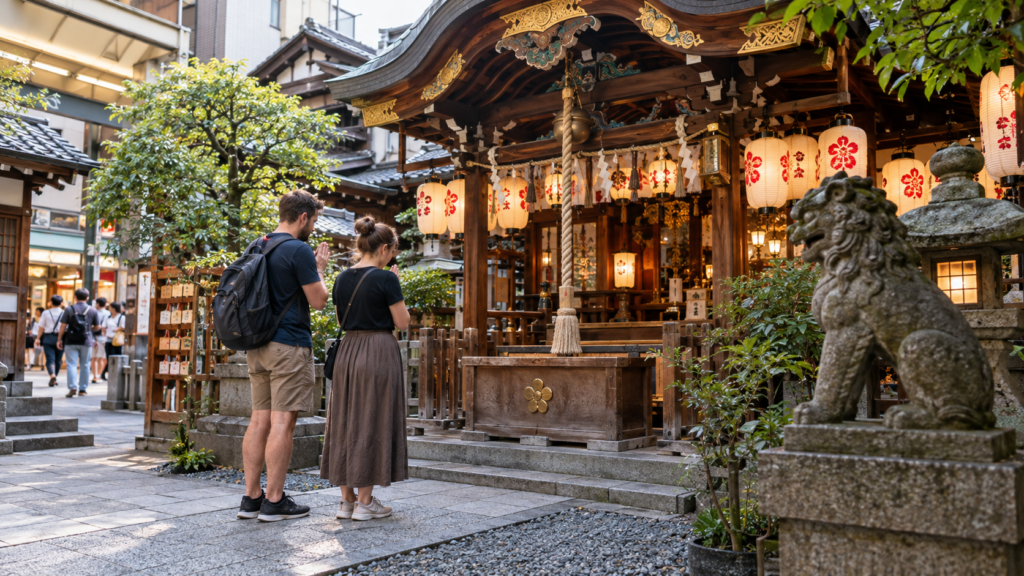
At the eastern end of Nishiki Market stands Nishiki Tenmangu Shrine. Its colorful lanterns and compact entrance make it one of the easiest cultural stops to add to a market visit.
The shrine is dedicated to Sugawara no Michizane, a historical scholar who is worshipped as a deity of learning. Students and families often visit Tenmangu shrines to pray for success in study and examinations.
Although the shrine is surrounded by busy shopping streets, the atmosphere changes as soon as you enter. You can observe how residents visit a neighborhood shrine, see smaller auxiliary shrines and take a quiet pause before continuing through downtown Kyoto.
A visit usually takes around 15 to 30 minutes. Admission is free, although opening times can change.
When entering a shrine, walk calmly and avoid standing in the center of the approach. At the worship area, a respectful visit usually involves making a small offering, bowing twice, clapping twice, praying and bowing once more.
3. Walk through Shinkyogoku Shopping Street
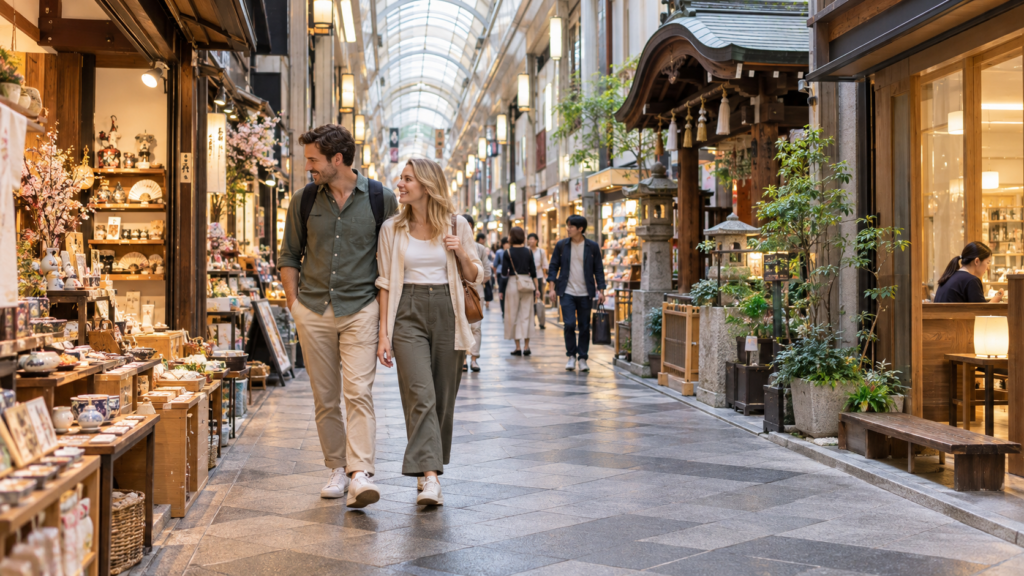
Immediately beyond Nishiki Tenmangu is Shinkyogoku, one of central Kyoto’s best-known covered shopping arcades.
While Nishiki Market focuses mainly on food and culinary goods, Shinkyogoku offers a broad mix of souvenir shops, fashion, sweets, character goods, cosmetics and casual restaurants.
The street is lively and easy to explore in any weather. It is particularly useful if you are looking for affordable souvenirs or traveling with a group whose interests vary.
Small temples and shrines are also located between the shops. This mixture of religious sites and modern retail is characteristic of downtown Kyoto, where centuries-old traditions exist alongside contemporary city life.
Allow 30 to 60 minutes, depending on how much shopping you plan to do.
4. Browse Teramachi Shopping Street
Teramachi runs parallel to Shinkyogoku and offers a slightly different atmosphere. Parts of the street contain clothing and souvenir shops, while other sections feature bookstores, cafés, galleries, antique stores and long-established specialty businesses.
The name “Teramachi” means “temple town.” The street developed after temples were moved to the area during the reorganization of Kyoto in the late 16th century.
Today, it is a good place to slow down after the crowds of Nishiki Market. You may find handmade paper, incense, tea utensils, traditional confectionery or contemporary design products.
Teramachi is also a convenient choice on a rainy or very hot day because much of the shopping street is covered.
For a simple route, walk east through Nishiki Market to Nishiki Tenmangu, explore Shinkyogoku and then return west along Teramachi.
5. Experience a tea ceremony in a historic Kyoto townhouse
Eating Kyoto food is one way to encounter local culture. Taking part in a traditional art allows you to experience it more directly.
Nishiki Orizuruya is located close to Nishiki Market in a Kyoto machiya more than 100 years old. The building is also associated with Morgan Oyuki, a Kyoto geisha whose international marriage led newspapers of her era to call her the “Cinderella of Japan.”
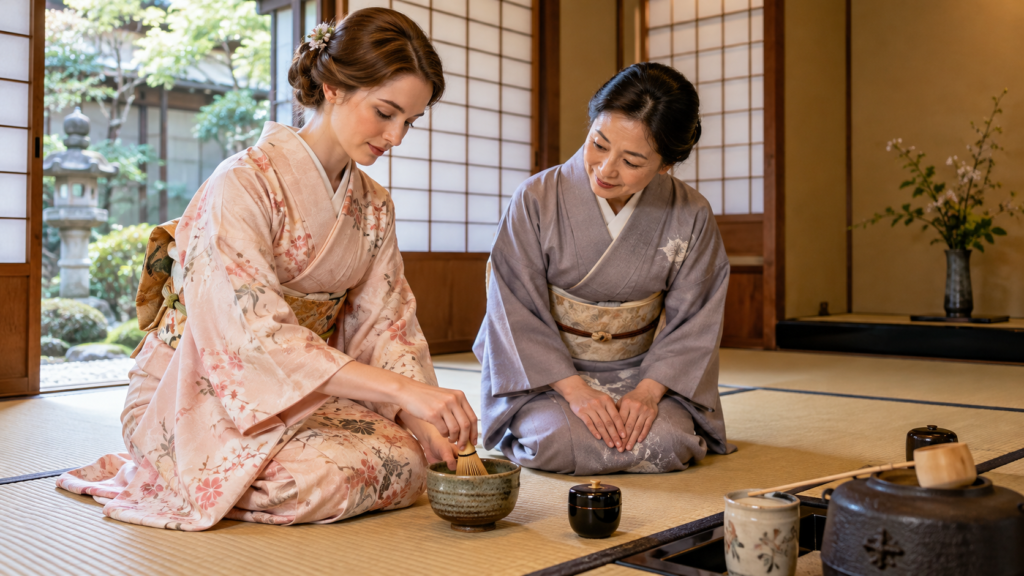
Inside the townhouse, visitors can wear kimono and take part in experiences including tea ceremony and Japanese calligraphy. All of the cultural experience courses include kimono dressing.
This makes the visit different from a simple kimono rental. Instead of only putting on traditional clothing, you use the kimono as part of a structured cultural experience.
During the tea ceremony experience, guests learn about the history and basic ideas of tea, watch a demonstration and prepare matcha themselves with guidance from an instructor. Japanese sweets are served with the tea.
Nishiki Orizuruya currently offers several options:
- Tea Ceremony Experience: 90 minutes
- Calligraphy Experience: 90 minutes
- Tea Ceremony and Calligraphy Experience: 120 minutes
- Tea Ceremony and Nishiki Market Walking Tour: 150 minutes
The listed cultural plans include kimono dressing. Because details and prices may change, confirm the latest information when booking.
A convenient way to combine sightseeing and culture
The Tea Ceremony and Nishiki Market Walking Tour includes kimono dressing, a tea ceremony and a guided walk through Nishiki Market and the surrounding shopping district. English-speaking staff introduce the area’s history and notable shops.
See tour details and availability
6. Walk to Rokkakudo Temple
Rokkakudo, officially known as Chohoji Temple, is another peaceful stop within the central Kyoto area.
Its popular name means “six-sided hall,” referring to the shape of the temple’s main building. The temple is closely connected with the history of ikebana, the Japanese art of flower arrangement, and is traditionally associated with the origins of the Ikenobo school.
Rokkakudo is a useful addition for travelers who want to see a historic temple without making a long journey to Kyoto’s outer sightseeing districts.
The temple grounds are relatively compact, so most visitors spend around 20 to 30 minutes here. Its central location also makes it easy to combine with cafés and shops around Karasuma.
When visiting, remember that it remains an active religious site. Keep your voice low, follow posted photography rules and avoid interrupting people who are praying.
7. Visit the Kyoto International Manga Museum
If you want to balance traditional Kyoto with modern Japanese culture, continue north toward the Kyoto International Manga Museum.
The museum holds approximately 300,000 manga and manga-related materials, from historical publications to contemporary works from Japan and other countries. It also functions as a research facility and library, and regularly presents special exhibitions.
The building itself adds another layer of interest. It was originally constructed as an elementary school in 1929, and parts of its earlier character remain visible.
This stop is especially suitable for:
- Manga and illustration fans
- Families with older children
- Travelers looking for an indoor activity
- Visitors interested in modern Japanese visual culture
- Rainy or extremely hot days
Opening days, admission fees and special-exhibition schedules can change, so check the museum’s official website before visiting.
A suggested half-day itinerary near Nishiki Market
The following route combines food, local history and a hands-on cultural experience without requiring long transfers.
9:30 a.m. — Arrive in the Nishiki area
Start from Karasuma Station or Shijo Station and walk toward Nishiki Market. Arriving earlier generally gives you more room to look around, although individual shops open at different times.
10:00 a.m. — Explore Nishiki Market
Spend around 60 to 90 minutes browsing food shops and tasting two or three Kyoto specialties.
Focus on small portions. A light visit to the market works better if you have a tea ceremony or lunch planned later.
11:15 a.m. — Visit Nishiki Tenmangu Shrine
Continue to the eastern end of the market and spend approximately 20 minutes at the shrine.
11:40 a.m. — Walk through Shinkyogoku or Teramachi
Browse one or both shopping arcades. If you are buying souvenirs, allow more time here.
12:30 p.m. — Take part in a Kyoto cultural experience
Walk to Nishiki Orizuruya for a kimono and tea ceremony experience. Depending on the course, allow 90 to 150 minutes.
The tea ceremony and Nishiki Market tour is especially useful for first-time visitors because it combines an indoor cultural activity with local guidance.
3:00 p.m. — Continue to Rokkakudo or the Manga Museum
Choose Rokkakudo for a short historic stop or the Manga Museum for a longer indoor visit.
This route can also be reversed. If you have a morning reservation at Nishiki Orizuruya, visit the market afterward.
How to choose the best route
For food lovers
Prioritize Nishiki Market and give yourself time to speak with shop staff where possible. Follow the market with a tea ceremony to experience a different side of Kyoto’s food culture.
For first-time visitors to Japan
Combine the market with Nishiki Tenmangu and a guided cultural experience. This gives you context for shrine etiquette, kimono and tea ceremony customs without requiring previous knowledge.
For families
Keep the market visit relatively short, then choose an interactive activity. Making matcha or trying calligraphy often gives children and teenagers a clearer memory than several hours of passive sightseeing.
For couples
Kimono dressing, tea ceremony and photography create a more personal itinerary. The traditional townhouse and nearby shopping streets provide several opportunities for photographs.
For rainy days
Nishiki Market, Shinkyogoku and Teramachi are largely covered, while tea ceremony, calligraphy and the Manga Museum are indoor activities. This makes the neighborhood one of the easiest parts of Kyoto to explore in poor weather.
Getting to Nishiki Market
Nishiki Market is located in downtown Kyoto and is easily reached by train.
According to the official market access guide, the nearest stations include:
- Shijo Station on the Kyoto Subway Karasuma Line: approximately 3 minutes on foot
- Karasuma Station on the Hankyu Kyoto Line: approximately 3 minutes on foot
- Kyoto Kawaramachi Station on the Hankyu Kyoto Line: approximately 4 minutes on foot
- Gion-Shijo Station on the Keihan Main Line: approximately 10 minutes on foot
From Kyoto Station, the subway is often the most convenient option. Take the Karasuma Line to Shijo Station and continue on foot.
Nishiki Orizuruya is approximately six minutes from Karasuma Station, eight minutes from Kyoto Kawaramachi Station and eight minutes from Shijo Subway Station.
Practical tips for visiting the area
Check business information before you go
Nishiki Market shops, temples, museums and cultural facilities operate independently. Check official websites for current opening hours, holidays and reservation requirements.
Travel without large luggage
Narrow market streets and shopping arcades are difficult to navigate with suitcases. Leave large bags at your hotel or in station lockers when possible.
Reserve cultural experiences in advance
Market shopping is flexible, but tea ceremony and kimono experiences operate on scheduled times. Booking the timed activity first makes the rest of the itinerary easier to organize.
Wear comfortable shoes
Even though the attractions are close together, you may spend several hours standing and walking.
Do not try to see everything
Central Kyoto rewards slower exploration. It is better to enjoy four stops properly than to rush through every attraction in one afternoon.
Frequently asked questions
What is there to do near Nishiki Market besides eating?
You can visit Nishiki Tenmangu Shrine, explore Shinkyogoku and Teramachi, take part in a tea ceremony or calligraphy experience, see Rokkakudo Temple and visit the Kyoto International Manga Museum.
How long should I spend around Nishiki Market?
Allow at least two hours for the market and nearby shopping streets. A half day is better if you want to include a shrine, temple or cultural experience.
Is Nishiki Market free to enter?
Yes. There is no admission fee to enter the shopping street. You pay only for the food and products you purchase.
What time should I visit Nishiki Market?
Late morning is convenient because more shops are likely to be open. Earlier visits may be less crowded, but individual opening hours vary.
Is the Nishiki Market area suitable for rainy days?
Yes. The market and the main shopping arcades are covered. Tea ceremony, calligraphy and museums also provide indoor options.
Can I experience a tea ceremony near Nishiki Market?
Yes. Nishiki Orizuruya offers tea ceremony experiences in a historic Kyoto townhouse close to the market. Kimono dressing is included in its cultural experience courses.
Can I tour Nishiki Market with an English-speaking guide?
Nishiki Orizuruya offers a Tea Ceremony and Nishiki Market Walking Tour with support from English-speaking staff. The course combines kimono dressing, tea ceremony and a guided neighborhood walk.
Experience more than sightseeing near Nishiki Market
The area around Nishiki Market is compact, but it contains many different sides of Kyoto. Within a few hours, you can discover local ingredients, visit a neighborhood shrine, explore covered shopping streets and enter a historic machiya.
For a more memorable visit, include at least one experience in which you actively take part. Preparing matcha, practicing calligraphy or walking through the neighborhood in kimono creates a stronger connection with Kyoto than sightseeing alone.
Nishiki Orizuruya brings these experiences together near the market, making it easy to add Japanese culture to a central Kyoto itinerary.
Turn your visit to Nishiki Market into a complete Kyoto experience.
Dress in kimono, learn the basics of tea ceremony and explore the market with local guidance.
View the Tea Ceremony and Nishiki Market Walking Tour