

Kimono Tea Ceremony in Kyoto: What Is Included?
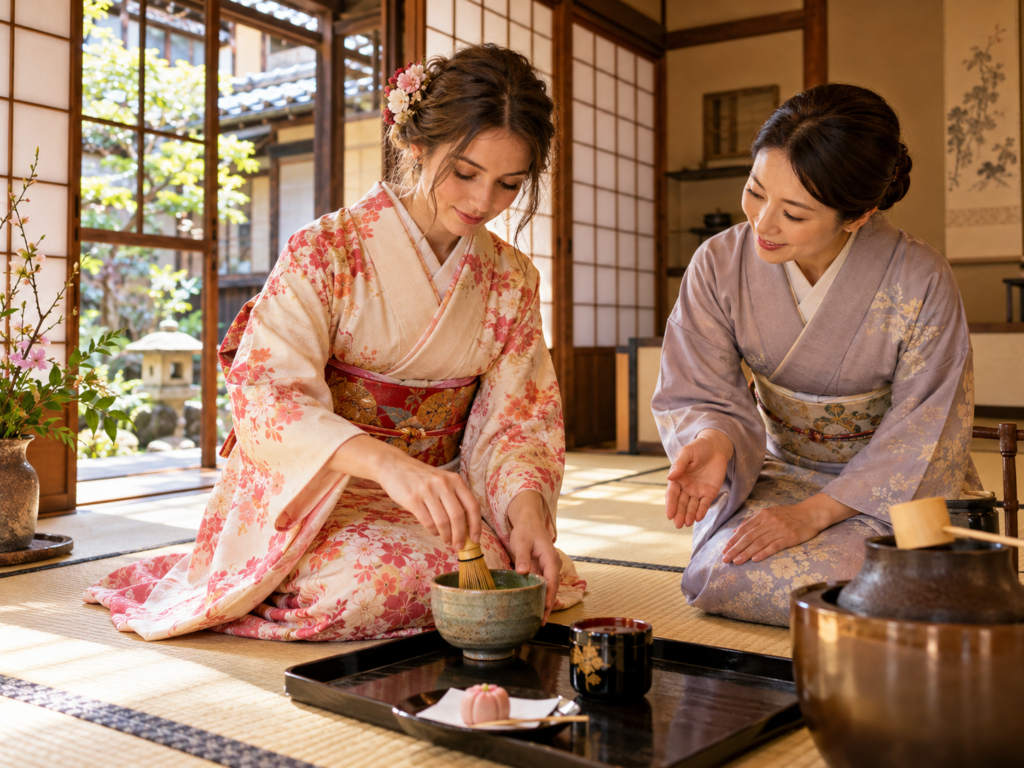
A kimono tea ceremony in Kyoto combines two traditional Japanese experiences: wearing a kimono and learning how to prepare matcha during a tea ceremony.
For travelers who want to try both activities, choosing a package with kimono dressing included can make planning much easier. Instead of arranging a separate kimono rental, changing clothes at one location and traveling to another venue, you can enjoy everything in a single visit.
At Nishiki Orizuruya, a cultural experience facility near Nishiki Market in central Kyoto, the Tea Ceremony Experience includes kimono dressing, an introduction to Japanese tea culture, a professional demonstration, hands-on matcha preparation and Japanese sweets.
The course is currently listed at ¥7,700 for 90 minutes, including kimono dressing.
Guests can choose from a range of kimono colors and patterns, receive dressing assistance and take part in the tea ceremony inside a traditional Kyoto townhouse that is more than 100 years old.
The experience is designed for international visitors, including people who have never worn a kimono or prepared matcha before.
This guide explains what is included, how the experience works, what costs extra and what to know before booking.
Experience a traditional Japanese tea ceremony while wearing a kimono.
At Nishiki Orizuruya, kimono dressing and hands-on matcha preparation are included in one cultural experience.
View Kimono Tea Ceremony Details and Booking Information
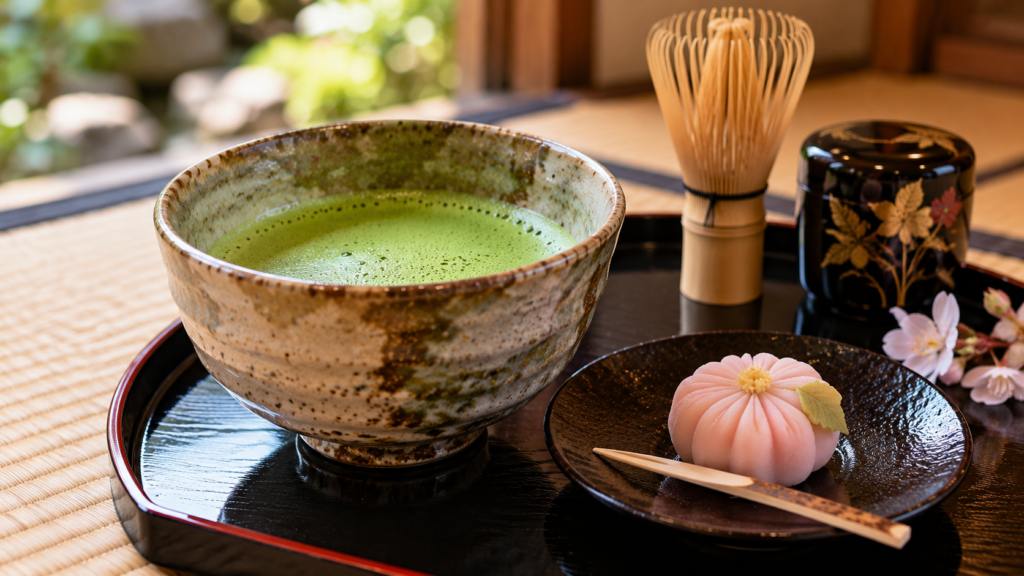
Kimono Tea Ceremony in Kyoto: What’s Included at a Glance
Before booking a kimono tea ceremony in Kyoto, it is important to understand exactly what the package includes.
Some experiences focus primarily on kimono dressing and photography. Others offer tea ceremony demonstrations, while hands-on courses allow visitors to prepare matcha themselves.
Nishiki Orizuruya combines kimono dressing and an instructor-led tea ceremony in one course.
| Experience component | Included in Nishiki Orizuruya’s Tea Ceremony Course? |
| Kimono selection | Yes |
| Professional kimono dressing | Yes |
| Kimono accessories and footwear | Yes |
| Hair styling for female guests | Yes |
| Introduction to tea ceremony history and preparation | Yes |
| Professional tea preparation demonstration | Yes |
| Prepare your own matcha | Yes |
| Matcha and Japanese sweets | Yes |
| Traditional Kyoto townhouse setting | Yes |
| Guided Nishiki Market walking tour | Separate course |
| Professional studio photography package | Separate plan |
Listed price: ¥7,700
Listed duration: 90 minutes
Location: Nishiki Orizuruya, approximately six minutes on foot from Hankyu Karasuma Station.
The basic course also offers an option to go outside wearing the kimono afterward, subject to the venue’s return conditions.
Photography packages and guided walking tours are separate services. They should not be assumed to be included in the ¥7,700 course.
This distinction is useful when comparing packages with different prices.
Why Combine Kimono Dressing and a Tea Ceremony?
The main benefit of combining kimono dressing and tea ceremony is that both traditions become part of one connected cultural activity.
A kimono is traditional Japanese clothing, while the tea ceremony introduces the customs and hospitality associated with preparing matcha for guests.
Experiencing them together gives travelers a chance to appreciate Japanese clothing, traditional interiors, tea utensils and cultural etiquette in one setting.
Experience Traditional Clothing in a Meaningful Setting
Wearing a kimono can be memorable by itself, especially for travelers who are visiting Japan for the first time.
However, combining kimono dressing with tea ceremony creates a different experience from simply renting traditional clothing for photographs.
You can enter a tatami room, observe the host’s movements and prepare matcha while wearing the kimono you selected.
The clothing becomes part of a cultural activity rather than just a sightseeing accessory.
Avoid Booking Two Separate Experiences
Arranging a kimono rental and a tea ceremony independently can involve multiple reservations.
You may need to travel between different shops, coordinate dressing times and consider when to return the rented clothing.
A combined package reduces these practical complications.
At Nishiki Orizuruya, kimono dressing and tea ceremony take place as parts of the same cultural course.
This is especially convenient for travelers staying in central Kyoto or those with limited sightseeing time.
Learn Through Participation, Not Only Observation
The Japanese tea ceremony is often associated with precise movements and beautiful traditional utensils.
Watching a demonstration can be fascinating, but preparing matcha yourself offers an additional way to learn.
At Nishiki Orizuruya, guests observe an instructor and then use a bamboo whisk to prepare their own tea.
This allows visitors to connect the explanation with the actual movements and tools.
For beginners, hands-on participation can make an unfamiliar tradition easier to understand.
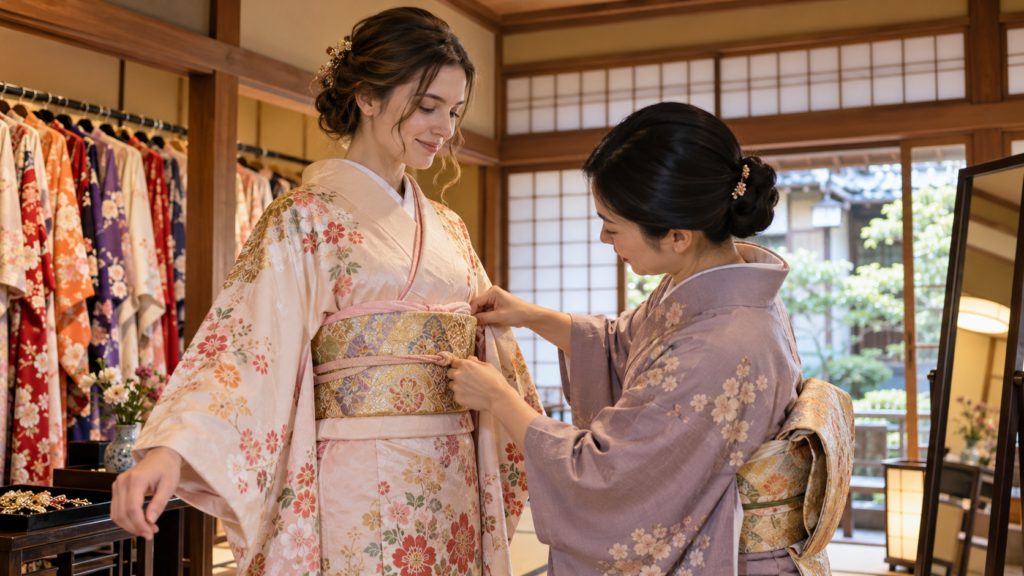
Step by Step: What Happens During a Kimono Tea Ceremony?
The Tea Ceremony Experience at Nishiki Orizuruya follows five main stages.
The process begins with kimono dressing and ends with enjoying the matcha you have prepared.
The order below reflects the venue’s official description. Individual stages are not assigned fixed durations, so the 90 minutes should be understood as the listed course duration rather than a precise minute-by-minute schedule.
Step 1: Choose Your Kimono and Get Dressed
The first part of the experience is selecting a kimono.
Nishiki Orizuruya provides a range of colors, patterns and sizes, allowing guests to find a style they like.
You might choose a simple design in muted colors or a more colorful pattern with traditional floral details.
If you are unsure which kimono to select, the dressing staff can help.
After choosing the garment, staff assist with putting it on correctly and arranging the obi, the sash worn around the kimono.
Professional dressing is particularly useful for first-time visitors because traditional kimono clothing involves several layers and specific adjustments.
Guests do not need to learn the entire dressing process beforehand.
The venue also provides kimono accessories, hair ornaments, bags and sandals.
Hair styling is available for female guests as part of the described experience.
This means travelers generally do not need to arrange a separate kimono rental shop or bring traditional accessories.
If you have specific sizing or styling requirements, contact the facility in advance.
Step 2: Learn About Japanese Tea Culture
After kimono dressing, the tea experience moves into a traditional tea room.
An instructor introduces the history and basic ideas of the Japanese tea ceremony.
Known in Japanese as sado or chanoyu, the tea ceremony is a cultural practice centered on preparing and serving tea with care.
The experience includes more than the beverage itself.
Tea bowls, hanging scrolls, flowers, sweets and the arrangement of the room contribute to the atmosphere.
The host considers these details when welcoming guests.
In Japanese culture, this thoughtful approach to welcoming others is often associated with omotenashi, or hospitality.
During the introduction, guests learn about these ideas and the basic techniques involved in preparing matcha.
The explanation provides context for the movements they will see and later try themselves.
Step 3: Watch a Professional Tea Ceremony Demonstration
Next, guests observe a professional tea preparation demonstration.
The instructor shows how the tea utensils are handled and how matcha is prepared.
One of the most distinctive tools is the chasen, a bamboo whisk used to mix powdered matcha with water.
The tea bowl, or chawan, is another important part of the experience.
Watching the demonstration allows visitors to see the connection between movements, utensils and presentation.
The ceremony may appear carefully choreographed, but its purpose is not simply to perform beautiful gestures.
The host’s attention to detail reflects care for the guest and respect for the occasion.
There is no need to memorize every movement during the demonstration.
For first-time participants, observing the process and listening to the instructor is enough to begin understanding the tradition.
Step 4: Prepare Your Own Matcha
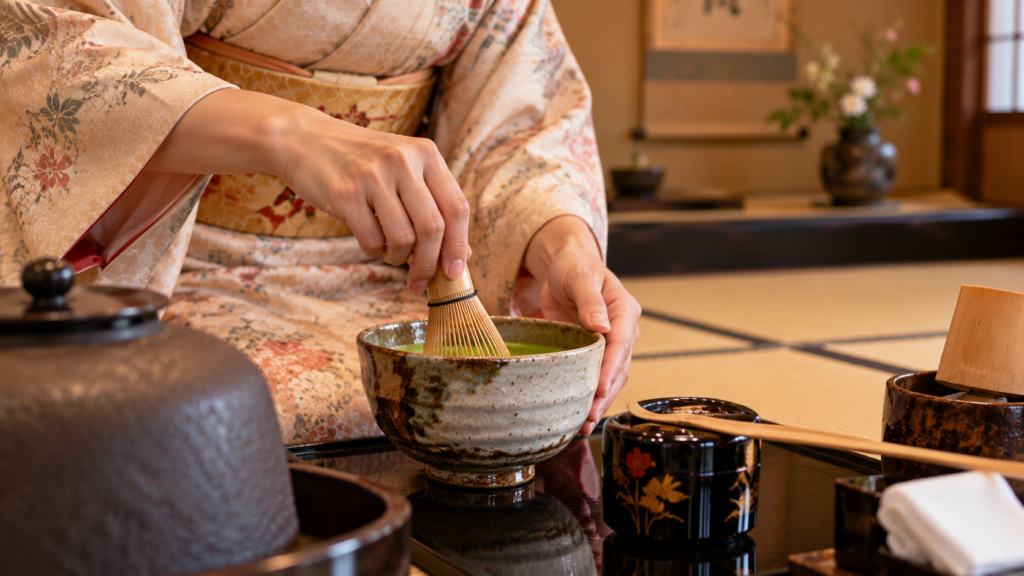
After the demonstration, participants have an opportunity to make matcha themselves.
This is one of the most appealing parts of Nishiki Orizuruya’s tea ceremony course.
Using a bamboo whisk, guests practice mixing the matcha under the guidance of staff.
The activity provides a chance to experience the movement involved in preparing tea rather than simply watching someone else do it.
For many international visitors, it may be their first time handling a chasen.
The instructor’s guidance helps guests become familiar with the tool and the preparation process.
The goal is not to achieve the technique of an experienced tea practitioner in one session.
Instead, it is to discover how simple ingredients and carefully practiced movements come together in a traditional Japanese activity.
Step 5: Enjoy Matcha with Traditional Japanese Sweets
The final stage is enjoying the freshly prepared matcha.
At Nishiki Orizuruya, tea is served with Japanese sweets.
The official website identifies Kofukudo, a long-established Kyoto confectionery shop, as a supplier of the seasonal sweets.
Japanese sweets, known as wagashi, are an important companion to matcha during many tea experiences.
Their flavors and presentation create a contrast with the distinctive taste of powdered green tea.
This final stage gives visitors an opportunity to appreciate what they have learned.
Rather than tasting matcha as an unfamiliar drink, guests can enjoy it with a better understanding of the utensils, preparation and hospitality involved.
What Does the Kimono Dressing Service Include?
Kimono dressing is one of the most important elements to check when choosing a tea ceremony package.
At Nishiki Orizuruya, it is part of the cultural experience rather than a separate reservation that guests must arrange elsewhere.
Kimono Selection and Dressing Assistance
Guests can choose from a variety of kimono designs.
Staff help with the selection and professional dressing, making the experience accessible even to travelers unfamiliar with Japanese clothing.
The official website also states that different kimono sizes are available.
However, the presence of different sizes does not automatically confirm every individual fit requirement. Guests with special sizing needs should inquire before booking.
Accessories, Footwear and Hair Styling
The venue provides accessories such as bags, sandals and hair ornaments.
Hair styling is offered for female guests.
These services help create a complete kimono appearance without requiring travelers to source accessories from separate shops.
If you have a particular hairstyle in mind, check what styles are available rather than assuming that every request can be accommodated.
What About Makeup and Professional Photography?
A kimono tea ceremony and a professional photography session are different services.
Nishiki Orizuruya offers separate studio photography packages, but these are not listed as part of the standard ¥7,700 tea ceremony experience.
Professional makeup is also not expressly confirmed as included in the basic course.
Travelers interested in studio portraits, special makeup or other additional arrangements should check the available options before booking.
You can enjoy the atmosphere of wearing a kimono during the experience without purchasing a separate studio photography package.
How Much Does a Kimono Tea Ceremony in Kyoto Cost?
Nishiki Orizuruya currently lists its Tea Ceremony Experience at ¥7,700 for 90 minutes, including kimono dressing.
Other courses combine tea ceremony with additional cultural activities.
| Course | Listed price | Duration | Main activities |
| Tea Ceremony Experience | ¥7,700 | 90 minutes | Kimono dressing and tea ceremony |
| Tea Ceremony + Calligraphy | ¥13,200 | 120 minutes | Kimono, matcha and brush calligraphy |
| Tea Ceremony + Nishiki Market Walking Tour | ¥13,200 | 150 minutes | Kimono, tea ceremony and guided neighborhood walk |
All three courses include kimono dressing.
Prices and course durations are those currently published on the official website and may change.
Which Course Should You Choose?
Choose the 90-minute Tea Ceremony Experience if:
You primarily want to wear a kimono, learn tea ceremony etiquette and make your own matcha.
This is the most straightforward option for travelers interested in the combination of traditional clothing and tea culture.
Choose Tea Ceremony + Calligraphy if:
You want to try two different Japanese arts during the same visit.
The calligraphy portion introduces brush writing and Japanese characters, giving you a creative activity alongside tea ceremony.
Choose Tea Ceremony + Nishiki Market Walking Tour if:
You want to connect your indoor cultural experience with sightseeing around central Kyoto.
The tour includes an English-speaking guide and a walk through the Nishiki Market area.
This is a separate guided plan rather than an automatically included part of the basic tea ceremony course.
Interested in the kimono and tea ceremony combination?
The 90-minute course at Nishiki Orizuruya includes kimono dressing, an instructor demonstration, hands-on matcha preparation and Japanese sweets.
Check Tea Ceremony Plans and Booking Information
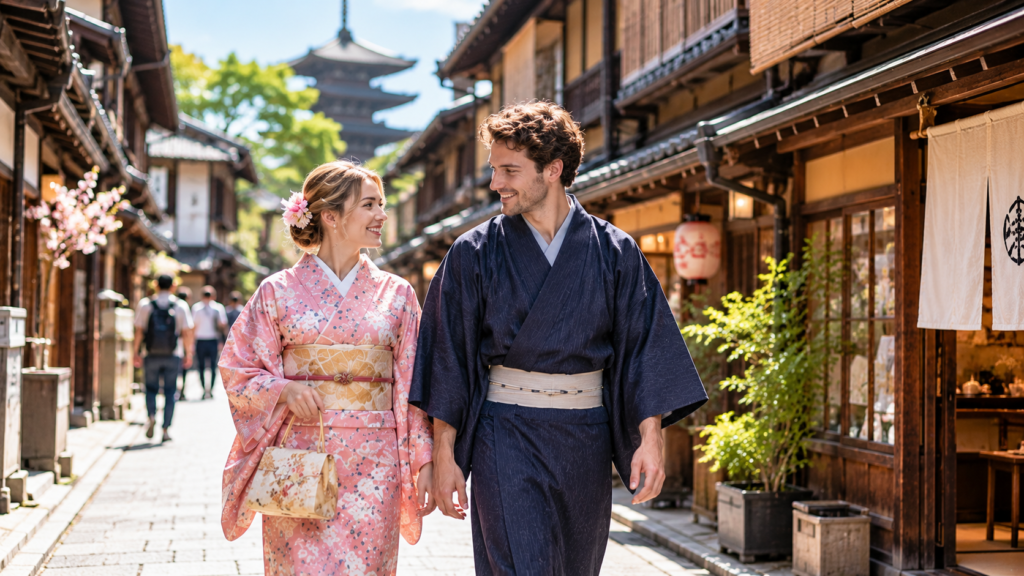
Can You Walk Around Kyoto in Your Kimono After the Tea Ceremony?
Yes. Nishiki Orizuruya allows guests using eligible cultural experience plans to go outside wearing their kimono.
According to the official website, guests who choose this option must return to the facility by 6:00 p.m. on the same day.
This allows visitors to combine their indoor cultural experience with time exploring Kyoto’s streets.
The facility is located close to the Nishiki Market area, making the surrounding neighborhood a convenient option for a short walk.
What Can You Do Nearby?
After your tea ceremony, you could enjoy the streets around Nishiki Market, browse traditional shops or stop at a nearby café.
You could also use the opportunity to take personal travel photographs in places where photography is permitted.
When exploring the city in kimono, remember that some streets can be busy and shopping areas may have limited space.
Move carefully, respect other visitors and follow local photography rules.
If you enter Nishiki Market, avoid eating while walking and follow the guidance of the shops where food is purchased.
Plan Around the Kimono Return Time
Do not assume that you can keep the kimono overnight or return it the following morning.
The published rule is to return by 6:00 p.m. on the day of the experience.
The exact amount of sightseeing time available will therefore depend on your booked course and its finishing time.
If you want to explore the city in kimono afterward, consider choosing a reservation that leaves enough time for walking, photographs and returning to the facility.
What Makes Nishiki Orizuruya Different?
Kyoto has many options for kimono rental and tea ceremony experiences.
Nishiki Orizuruya’s distinctive combination is its central location, included kimono dressing, hands-on tea instruction and historic townhouse setting.
A Tea Ceremony Inside a Historic Kyoto Townhouse
The facility operates inside a Kyoto machiya, a traditional townhouse more than 100 years old.
Unlike a modern studio designed only for photographs, the building provides an architectural setting associated with Kyoto’s history.
The facility is also identified as the former Morgan residence, associated with Morgan Oyuki, a Kyoto geisha also known as Kato Yuki.
The building contains Japanese decorations and traditional architectural elements, including a courtyard, hanging scrolls and decorative folding screens.
These surroundings provide a distinctive backdrop for the cultural experience.
Close to Nishiki Market and Shijo-Karasuma
Nishiki Orizuruya is within walking distance of several convenient railway stations.
According to the official site:
- Hankyu Karasuma Station: approximately 6 minutes on foot
- Hankyu Kyoto-Kawaramachi Station: approximately 8 minutes on foot
- Shijo Subway Station: approximately 8 minutes on foot
This location makes it practical to fit the activity into a sightseeing day focused on downtown Kyoto.
Rather than spending much of your visit moving between separate clothing and cultural experience venues, you can arrange the main activities at one place.
An Experience for International Visitors
Nishiki Orizuruya focuses on cultural experiences for international tourists.
The venue’s website provides multilingual information, and it offers services intended for visitors learning about Japanese culture for the first time.
The guided Nishiki Market tour explicitly includes an English-speaking guide.
For other individual course language arrangements, guests should confirm their preferred language at booking.
The Japanese-language official website states that Japanese customers are not accepted. Groups that include Japanese participants should confirm eligibility directly before reserving.
What to Wear, Bring and Know Before Booking
Preparing for a tea ceremony with kimono dressing does not need to be complicated.
However, several practical details are worth checking.
Do You Need to Bring Your Own Kimono?
No. The standard tea ceremony course includes kimono selection and dressing.
The official website also lists accessories, sandals and hair ornaments as provided.
You do not need to arrange a separate kimono rental simply to attend this particular course.
What Should You Wear to the Venue?
Choose comfortable everyday clothing for traveling to the venue and changing into a kimono.
If you have personal clothing requirements, mobility concerns or unusual sizing needs, contact the staff in advance.
The official course description does not confirm every possible accommodation, so it is better to ask than assume.
Do You Need Tea Ceremony Experience?
No previous tea ceremony knowledge is required to follow the beginner-oriented experience.
You will receive an introduction and observe the preparation before trying to make matcha yourself.
It is helpful to pay attention to the instructor, handle the utensils carefully and ask questions when appropriate.
Should You Arrive Early?
Plan your route and allow enough time to reach the venue before your reservation.
The official website warns that late arrivals may be unable to receive the booked experience.
Check your booking confirmation for the exact arrival instructions.
Are Dietary and Accessibility Arrangements Available?
The tea course includes matcha and Japanese sweets, but specific allergy accommodations and ingredient substitutions are not confirmed in the published description.
Accessibility arrangements, alternative seating and other special requirements should also be checked directly with the venue.
If these considerations affect your ability to participate, contact the facility before booking.
Suggested Half-Day Plan: Kimono, Matcha and Downtown Kyoto
A kimono tea ceremony can be the centerpiece of a relaxed half-day in Kyoto.
The following schedule is only an example. It does not indicate confirmed reservation availability.
| Example time | Activity |
| 9:30 a.m. | Explore the Shijo-Karasuma or Nishiki Market neighborhood |
| 10:30 a.m. | Arrive for a tea ceremony reservation, if this time is offered |
| 10:30 a.m.–12:00 p.m. | Kimono dressing and tea ceremony experience |
| 12:00 p.m. | Continue exploring nearby streets in kimono, if using the outing option |
| 1:00 p.m. | Enjoy lunch or visit local shops |
| Before 6:00 p.m. | Return to Nishiki Orizuruya to return the kimono |
If you prefer to explore Nishiki Market before the tea ceremony, the itinerary can be reversed.
A morning market walk followed by an afternoon cultural experience is another possible combination.
The most important step is confirming your actual reservation time first, then organizing the surrounding activities.
Do not treat the example as an exact schedule for changing clothes, instruction or sightseeing.
Frequently Asked Questions About Kimono Tea Ceremony in Kyoto
Is kimono dressing included in a Kyoto tea ceremony?
It depends on the provider. At Nishiki Orizuruya, the 90-minute Tea Ceremony Experience includes kimono dressing in the listed price of ¥7,700.
How long does a tea ceremony with kimono dressing take?
Nishiki Orizuruya currently lists its Tea Ceremony Experience at 90 minutes. Other providers may have different durations, so compare the total course time rather than the tea demonstration alone.
Can beginners participate in a Japanese tea ceremony?
Yes. Nishiki Orizuruya introduces the history and preparation of tea, provides a professional demonstration and guides participants as they prepare their own matcha.
Does the price include hair styling?
The official description includes hair styling for female guests. If you want a particular style or have specific requirements, check with the staff beforehand.
Do I get to prepare my own matcha?
Yes. Guests at Nishiki Orizuruya can use a bamboo tea whisk to prepare matcha with staff assistance, then enjoy it with Japanese sweets.
Can I keep wearing the kimono after the tea ceremony?
Eligible cultural experience guests can go outside wearing their kimono, but they must return to the facility by 6:00 p.m. on the same day.
Is a professional photo session included?
No professional studio photography package is listed as part of the standard Tea Ceremony Experience. Studio photography is offered separately.
Is the tea ceremony available in English?
Nishiki Orizuruya serves international travelers and provides multilingual information. Its guided market tour specifically includes an English-speaking guide. Confirm the language of instruction for your selected tea ceremony session before booking.
Can children join the experience?
The kimono service lists children’s sizes, but that alone does not confirm age eligibility for the tea ceremony course. Ask the venue about the minimum age and any participation requirements.
Can Japanese visitors book the tea ceremony?
The venue’s Japanese-language official website states that Japanese customers are not accepted. If your group includes Japanese participants, confirm the admission policy directly before booking.
More Kyoto Kimono and Cultural Experience Guides
If you would like to learn more about wearing a kimono and exploring Kyoto, these related articles may help:
- Explore Kyoto in Kimono: Why Nishiki Orizuruya’s Kimono Experience Is Popular
- Best Cultural Experiences Near Nishiki Market in Kyoto
- Explore More Kyoto Travel and Culture Articles
For the latest official information, see the Kimono Experience and Tea Ceremony Experience pages.
Enjoy a Kimono Tea Ceremony Near Nishiki Market in Kyoto
Combining kimono dressing with a Japanese tea ceremony offers an opportunity to experience traditional culture beyond ordinary sightseeing.
You can choose a kimono, learn how it is worn, observe an instructor preparing tea and then prepare your own matcha.
At Nishiki Orizuruya, these activities take place inside a historic Kyoto townhouse near Nishiki Market.
The 90-minute Tea Ceremony Experience includes kimono dressing, professional instruction, hands-on matcha preparation and Japanese sweets.
For international visitors who want to enjoy Japanese clothing and tea culture during one convenient visit, this combination provides a practical introduction to Kyoto’s traditions.
Make your Kyoto visit more memorable with kimono and matcha.
Discover the Tea Ceremony Experience at Nishiki Orizuruya, just a short walk from Hankyu Karasuma Station.