

Nishiki Market Tour in Kyoto: Food, Culture and Tea Ceremony
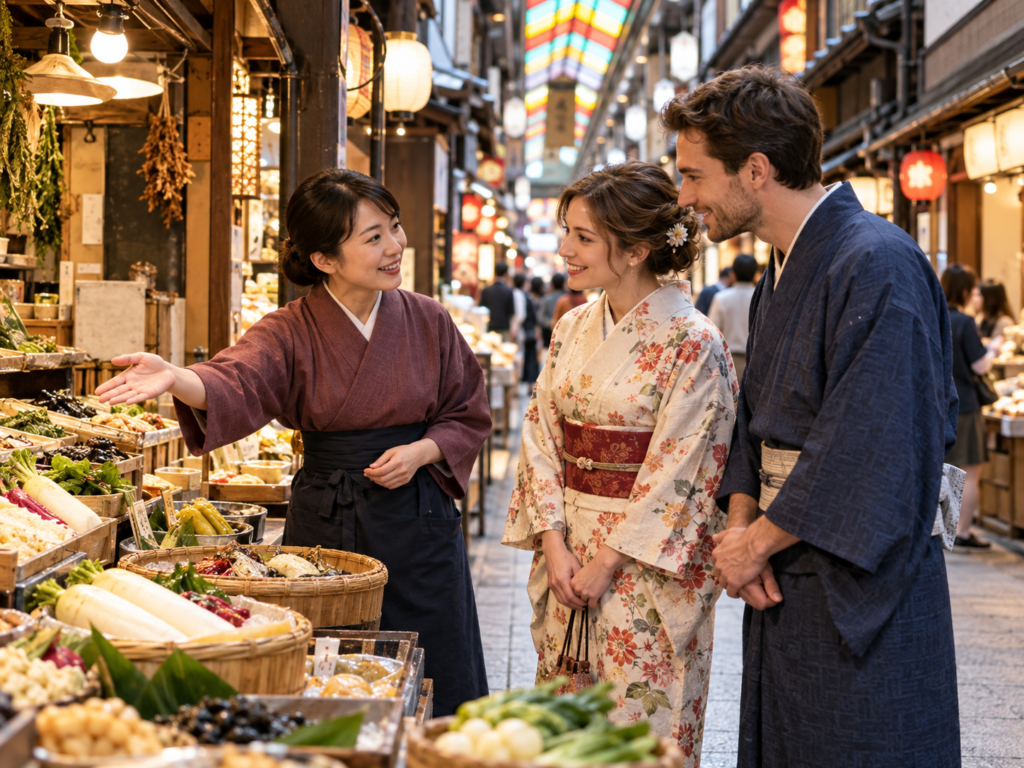
Nishiki Market is one of the best places to discover Kyoto’s food culture. Its narrow covered street is lined with shops selling seasonal vegetables, seafood, pickles, tea, sweets and ingredients used in traditional Kyoto cooking.
However, simply walking through the market does not always reveal the stories behind what you see.
Why are certain vegetables associated with Kyoto? How are ingredients such as yuba and fu used? Which products are seasonal? What is the correct way to enjoy food in the market?
A guided Nishiki Market tour can answer these questions while helping you explore the area respectfully and efficiently.
For travelers who want to experience more than food, Nishiki Orizuruya combines an English-guided walk around Nishiki Market with kimono dressing and an authentic Japanese tea ceremony inside a historic Kyoto townhouse.
The complete experience takes approximately 150 minutes, making it easy to include in a half-day itinerary in downtown Kyoto.
Experience food, history and tea culture in one visit.
Dress in kimono, prepare matcha and explore Nishiki Market with English-speaking guidance.
View the Tea Ceremony and Nishiki Market Walking Tour
Nishiki Market Tour at a Glance
- Experience: Kimono dressing, tea ceremony and guided neighborhood walk
- Main area: Nishiki Market and the surrounding shopping district
- Language support: English-speaking staff
- Duration: Approximately 150 minutes
- Price: ¥13,200 per person
- Kimono: Included
- Tea and sweets: Included as part of the tea ceremony
- Location: Nishiki Orizuruya in downtown Kyoto
- Recommended for: First-time visitors, couples, families and cultural travelers
- Advance booking: Recommended
Prices, availability and course details may change. Check the booking page for the latest information before visiting.
What Is Special About Nishiki Market?
Nishiki Market is a covered shopping street extending approximately 390 meters between Takakura Street and Teramachi Street.
Although its present form developed over several centuries, the area may have been used as a market as early as the Heian period. Official records identify 1615 as an important point in its development, when the Edo shogunate recognized fish wholesalers operating in Kyoto.
The area’s cold groundwater helped merchants preserve fish and other fresh products before modern refrigeration. Its central location also made the market convenient for local residents, restaurants and deliveries to the Imperial Palace.
Today, Nishiki Market contains around 130 shops and is commonly known as “Kyoto’s Kitchen.” It remains connected to Kyoto’s everyday culinary culture, not only tourism.
Products commonly found in the market include:
- Kyoto vegetables
- Fresh and prepared seafood
- Pickled vegetables
- Yuba, or tofu skin
- Fu, a traditional wheat-gluten product
- Dashimaki tamago
- Dried foods and seasonings
- Japanese tea
- Matcha sweets
- Seasonal wagashi
- Kitchen knives and cooking utensils
Many products have cultural or seasonal meanings that are difficult to understand by appearance alone. This is one of the main reasons to consider visiting with a guide.
Self-Guided Visit or Guided Nishiki Market Tour?
It is possible to visit Nishiki Market independently. There is no admission fee, and the covered street is easy to access from central Kyoto stations.
A self-guided visit is suitable if you mainly want to browse, shop or try a few foods at your own pace.
A guided tour offers a different type of experience.
Advantages of a Guided Tour
A knowledgeable guide can help you:
- Identify ingredients that are unique or important to Kyoto
- Understand how foods are used in home cooking and traditional cuisine
- Learn about the history of the market and surrounding streets
- Communicate more easily with local shops
- Follow local etiquette
- Find details that are easy to overlook
- Connect the market with Kyoto’s broader cultural traditions
Nishiki Market is visually exciting, but many of its most interesting stories are not immediately obvious. A guide adds context to the food, shops and neighborhood.
When a Self-Guided Visit May Be Better
An independent visit may be preferable if you:
- Have only 30 to 45 minutes
- Want to visit one specific shop
- Prefer completely flexible shopping time
- Have already visited the market with a local guide
- Are comfortable researching each product yourself
For first-time visitors, a guided experience generally provides a clearer introduction.
What Happens on the Nishiki Orizuruya Tour?
The Tea Ceremony and Nishiki Market Walking Tour brings several Kyoto experiences together in one course.
Rather than meeting directly inside the crowded market, guests begin at Nishiki Orizuruya, a traditional machiya located close to Nishiki Market.
The property is more than 100 years old and is associated with Morgan Oyuki, a Kyoto geisha remembered for her international marriage in the early 20th century.
The experience then proceeds through five main stages.
1. Choose Your Kimono and Get Dressed
The experience begins with kimono selection and professional dressing.
Guests can choose a kimono before staff assist with the layers, obi and accessories. Hair styling is also available for female guests as part of the dressing service.
Wearing kimono changes the pace of the experience. You naturally walk more carefully and become more aware of your posture, movement and the traditional setting around you.
All of Nishiki Orizuruya’s cultural experience courses include kimono dressing, so it is not necessary to arrange a separate kimono rental before arriving.
2. Learn the Basics of Japanese Tea Ceremony
After dressing, guests enter a traditional Japanese tea room.
The instructor explains the history and basic ideas of tea ceremony, including the importance of hospitality, seasonal awareness, careful movement and respect between host and guest.
You do not need previous knowledge of tea ceremony. The experience is designed so that international visitors and complete beginners can participate comfortably.
The instructor may also introduce utensils used to prepare matcha, such as:
- Chawan: Tea bowl
- Chasen: Bamboo whisk
- Chashaku: Bamboo tea scoop
- Natsume: Container for powdered tea
- Kama: Kettle used to heat water
Understanding these objects makes the demonstration easier to follow.
3. Watch an Authentic Tea Demonstration
The tea instructor then performs a demonstration.
Each movement is deliberate, from cleaning the utensils to placing the bowl in front of the guest. What may initially appear simple reflects centuries of practice and aesthetic thought.
The demonstration is not intended to be a formal test. Guests can watch, ask questions and learn what the movements represent.
This is an important difference between observing tea utensils in a museum and experiencing tea ceremony in a functioning tatami room.
4. Prepare and Enjoy Your Own Matcha
After watching the instructor, guests prepare matcha themselves.
You learn how to hold the tea bowl and whisk the powdered tea and hot water together. Staff provide guidance, so beginners do not need to worry about performing every movement perfectly.
The matcha is served with Japanese sweets. The sweetness of the confectionery balances the bitterness and aroma of the tea.
Preparing your own bowl turns the activity into a personal experience rather than a performance you only watch.
5. Explore Nishiki Market with English-Speaking Guidance
After the tea ceremony, guests leave the townhouse in kimono and begin the walking portion of the tour.
English-speaking staff guide visitors around Nishiki Market and the neighboring shopping district while explaining the area’s history, shops and cultural highlights.
Depending on the route and current market conditions, you may encounter foods and products such as pickles, seafood, Kyoto vegetables, omelets, tea, sweets and traditional kitchen goods.
The purpose is not simply to move from one food stall to another. The walk connects what you see in the market with the food, hospitality and seasonal ideas introduced during the tea ceremony.
Because the market changes with the seasons and individual shops have their own schedules, the exact shops and products available may vary.
Food purchases beyond the tea and sweets served during the tea ceremony should not be assumed to be included unless specifically stated during booking. Bring some additional yen if you would like to purchase food or souvenirs.
Why combine tea ceremony with a market tour?
The market shows the ingredients and everyday food culture of Kyoto, while tea ceremony introduces the city’s approach to hospitality, seasonality and presentation. Experiencing both creates a more complete cultural picture.
Check the Nishiki Market tour schedule
What Can You Discover During the Market Walk?
Seasonal Kyoto Ingredients
Kyoto cuisine places great importance on the seasons. Vegetables, fish, sweets and decorations change throughout the year.
A guided walk can help you notice which ingredients are connected to the season of your visit.
Kyoto Vegetables
Traditional Kyoto vegetables are valued for their distinctive shapes, colors, flavors and local history. Some may look unfamiliar even to travelers who have visited other parts of Japan.
Pickles
Kyoto-style pickles are sold throughout the market. Different vegetables and preservation methods produce a wide variety of colors, textures and flavors.
Yuba and Tofu Products
Yuba is the thin layer that forms on the surface of heated soy milk. It is used in temple cuisine, traditional meals and home cooking.
Dashi and Dried Ingredients
Dried fish, seaweed and other ingredients are used to make dashi, the stock that supports many Japanese dishes. Learning about dashi helps explain flavors found throughout Kyoto cuisine.
Japanese Sweets and Tea
Seasonal wagashi are often shaped or colored to suggest flowers, plants and natural scenery. They also have a close relationship with tea ceremony.
Traditional Tools
Nishiki Market is not limited to food. Some shops sell knives, cookware, chopsticks and other tools used in Japanese kitchens.
Nishiki Market Etiquette
Nishiki Market is a working shopping street used by businesses, local residents and visitors.
The official market asks visitors not to eat while walking. Food should be eaten inside or directly in front of the shop where it was purchased.
This rule helps prevent accidents and protects other visitors’ clothing in the narrow, sometimes crowded street.
Keep the following points in mind:
- Do not walk while eating
- Eat at the shop where you purchased the food
- Follow each shop’s instructions
- Ask before photographing staff or close-up displays
- Do not block entrances or the center of the street
- Carry rubbish until you find the correct disposal point
- Avoid bringing large suitcases
- Keep groups together without occupying the entire walkway
A guide can help visitors understand these expectations while still enjoying the market.
Who Is This Tour Recommended For?
First-Time Visitors to Kyoto
The course provides an introduction to kimono, tea ceremony, Kyoto food and the city’s shopping culture in a single experience.
Travelers Who Want More Than a Food Tour
Some market tours focus almost entirely on tasting. This course adds a structured cultural activity inside a traditional townhouse.
Couples and Friends
Kimono and the historic setting create memorable opportunities for photographs, while the market walk offers a relaxed shared activity.
Families
The course includes several changes of activity—dressing, watching, preparing tea and walking—making it more varied than a long lecture or museum visit.
Parents should confirm age requirements and kimono availability when booking.
Travelers with Limited Time
At approximately 150 minutes, the experience can fit into a half-day downtown Kyoto itinerary without requiring long transfers.
Visitors Concerned About Language
English-speaking staff support the market walk and cultural explanation, reducing the difficulty of understanding unfamiliar products and customs.
Price, Duration and Location
The Tea Ceremony and Nishiki Market Walking Tour is currently listed at:
- Price: ¥13,200 per person
- Duration: Approximately 150 minutes
- Included cultural elements: Kimono dressing, tea ceremony, matcha and Japanese sweets, and a guided neighborhood walk
- Language support: English-speaking guidance
- Venue: Nishiki Orizuruya
- Address: 452 Jumonji-cho, Takoyakushi-sagaru, Yanagibanba-dori, Nakagyo-ku, Kyoto 604-8121
- Opening hours shown on the Japanese website: 9:30 a.m.–6:00 p.m.
The venue is approximately:
- Six minutes on foot from Karasuma Station
- Eight minutes from Kyoto Kawaramachi Station
- Eight minutes from Shijo Subway Station
Prices and service details may change, so always check the current booking page.
What to Wear and Bring
Because kimono dressing is included, wear clothing that is easy to change out of.
Useful items include:
- Comfortable socks
- A small bag
- A phone or camera
- Cash for additional market purchases
- Drinking water, especially in summer
- Weather-appropriate outerwear
Avoid bringing large luggage. The market is narrow, and managing a suitcase while wearing kimono would be uncomfortable.
If you have allergies or dietary restrictions, contact the facility before booking. Do not assume that every market product or Japanese sweet will be suitable for your dietary needs.
Suggested Half-Day Plan
12:00 p.m. — Light Lunch Near Karasuma
Keep lunch relatively light if you plan to try additional food around the market.
1:00 p.m. — Arrive at Nishiki Orizuruya
Arrive before the reservation time so the experience can begin without delay. Late arrival may make it impossible to provide the full experience.
1:10 p.m. — Kimono Dressing
Choose a kimono and prepare for the tea ceremony.
1:45 p.m. — Tea Ceremony Experience
Learn about tea culture, observe the instructor and prepare matcha.
2:45 p.m. — Guided Market Walk
Explore Nishiki Market and its surrounding shopping streets with English-speaking staff.
3:40 p.m. — Finish the Guided Experience
After the tour, continue exploring downtown Kyoto independently.
You could visit Nishiki Tenmangu Shrine, browse Teramachi and Shinkyogoku or stop at a café before dinner.
These times are illustrative. Follow the schedule provided with your reservation.
Frequently Asked Questions
Is Nishiki Market free to enter?
Yes. Nishiki Market is a public shopping street and does not charge an entrance fee. Guided tours and cultural experiences are separately priced.
Does the tour include food tastings?
The course includes matcha and Japanese sweets as part of the tea ceremony. Do not assume that additional market food purchases are included unless the booking page or staff specifically confirms them.
Do I need to bring my own kimono?
No. Kimono selection and dressing are included in the course.
Do I need tea ceremony experience?
No. The experience is suitable for beginners. The instructor demonstrates the process and helps guests prepare matcha.
Is the market tour available in English?
Yes. The official course description states that knowledgeable staff assist the market walk in English.
How long does the experience take?
The complete course is listed as approximately 150 minutes.
Can I visit Nishiki Market in the rain?
Yes. Nishiki Market has a covered arcade. However, the route may include surrounding streets, so bring a compact umbrella on rainy days.
Should I reserve in advance?
Advance booking is recommended because kimono dressing, the tea ceremony room and staff must be prepared for the scheduled group.
Discover the Culture Behind Kyoto’s Kitchen
Nishiki Market is colorful and enjoyable even when visited independently. But its deeper appeal comes from understanding how its ingredients, shops and traditions connect with life in Kyoto.
A guided walk turns unfamiliar foods into stories. Kimono dressing changes the way you experience the historic streets. Tea ceremony introduces the attention to season, hospitality and detail that also shapes Kyoto cuisine.
By combining these elements, the Tea Ceremony and Nishiki Market Walking Tour offers more than a quick food stop. It creates a structured introduction to Kyoto’s everyday and traditional culture—all within one walkable downtown neighborhood.
Explore Nishiki Market with cultural context, not just a map.
Wear kimono, prepare your own matcha and discover Kyoto’s kitchen with English-speaking guidance.
View details and book the Nishiki Market tour