

Things to Do Near Karasuma Station in Kyoto
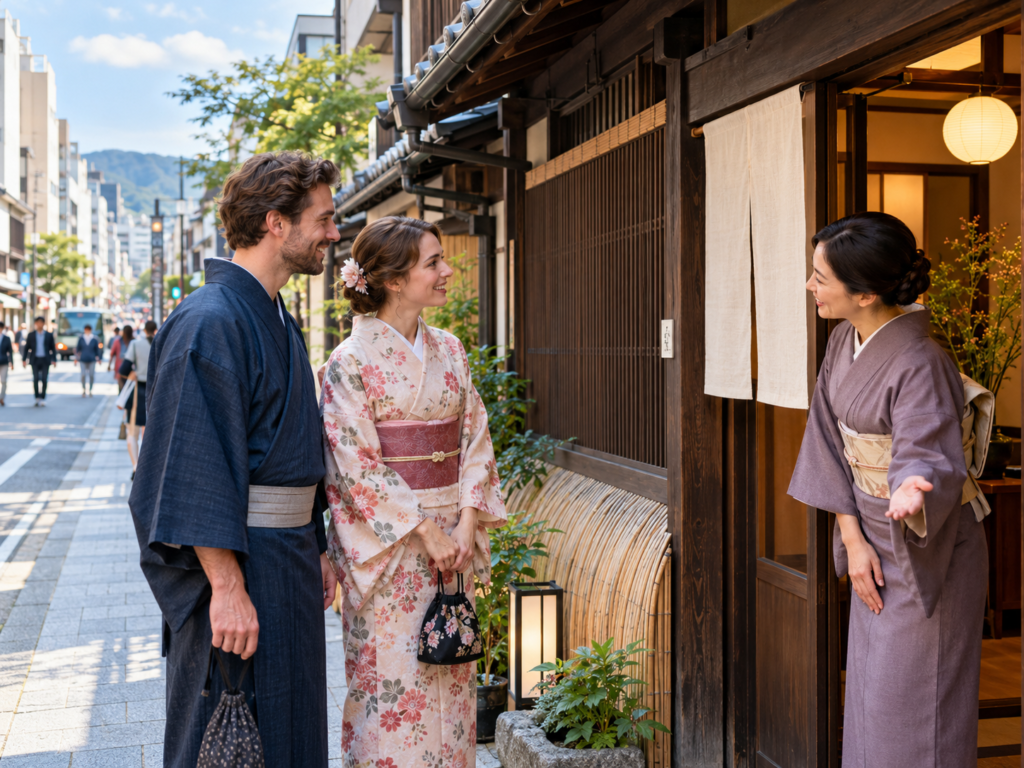
Looking for things to do near Karasuma Station in Kyoto? The Shijo-Karasuma neighborhood is one of the most convenient places to combine shopping, local cafés, historic temples, contemporary art and traditional Japanese cultural experiences.
Located in central Kyoto, Karasuma Station connects directly with Shijo Subway Station, making the neighborhood an excellent starting point for visitors arriving from Kyoto Station, Osaka or other parts of the city.
Within a short walk, you can explore stylish shopping complexes, visit Kyoto Art Center, discover Rokkakudo Temple and take part in a traditional tea ceremony while wearing a kimono.
For travelers who want to experience Kyoto without spending hours moving between attractions, this neighborhood offers an appealing balance of convenience and culture.
One particularly memorable option is Nishiki Orizuruya, a cultural experience facility located approximately six minutes on foot from Hankyu Karasuma Station. Housed in a historic Kyoto townhouse, it offers hands-on tea ceremony and calligraphy experiences with kimono dressing included.
Want to experience traditional Kyoto near Karasuma Station?
At Nishiki Orizuruya, international visitors can wear a kimono, learn about the Japanese tea ceremony and prepare their own matcha in a historic Kyoto townhouse.
View the Tea Ceremony Experience at Nishiki Orizuruya
Karasuma Station at a Glance: What Can You Do Nearby?
Karasuma Station is more than a convenient railway stop. Its surrounding streets offer several different ways to enjoy central Kyoto, from quick shopping breaks to a longer cultural itinerary.
| Place or experience | Main attraction | Suggested visit time |
| LAQUE Shijo Karasuma | Shopping, lifestyle goods and cafés | 30–45 minutes |
| COCON KARASUMA | Design shops, restaurants, cinema and galleries | 30–60 minutes |
| Kyoto Art Center | Contemporary arts and a historic school building | 30–60 minutes |
| Rokkakudo Temple | Historic Buddhist temple and ikebana heritage | 20–30 minutes |
| Nishiki Orizuruya | Kimono dressing and Japanese tea ceremony | 90 minutes |
| Shijo-Karasuma streets | Architecture, cafés and neighborhood shopping | 30–60 minutes |
These are suggested sightseeing durations, not official tour schedules. Actual time required will depend on your interests, shopping plans and reservations.
If you have only two hours, shopping and one nearby cultural stop may be enough. With half a day, you can combine several attractions with a pre-booked cultural experience.
Why Is Shijo-Karasuma a Good Area for Sightseeing?
The greatest advantage of Shijo-Karasuma is the ability to enjoy several sides of Kyoto within a relatively compact area.
Kyoto is famous for its temples, gardens and historic districts, but moving between distant sightseeing locations can take considerable time. Shijo-Karasuma provides a different travel experience: rather than crossing the city repeatedly, you can explore modern Kyoto and traditional culture on foot.
Two connected railway stations
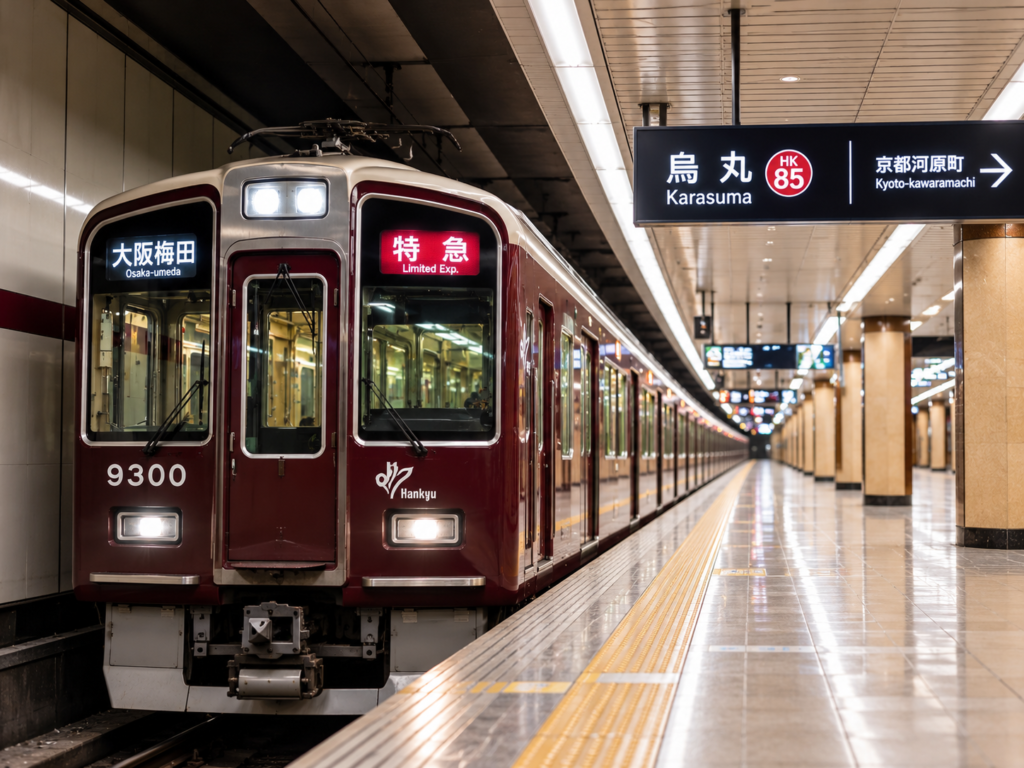
Karasuma Station is served by the Hankyu Kyoto Line, while Shijo Station is served by the Kyoto Municipal Subway Karasuma Line.
The two stations are connected underground, although they have different names and belong to different railway systems.
This arrangement is useful for visitors arriving from Kyoto Station on the subway or traveling from the Osaka direction using Hankyu Railway.
It also makes the neighborhood convenient for returning to your hotel after sightseeing.
Shopping and traditional culture in one neighborhood
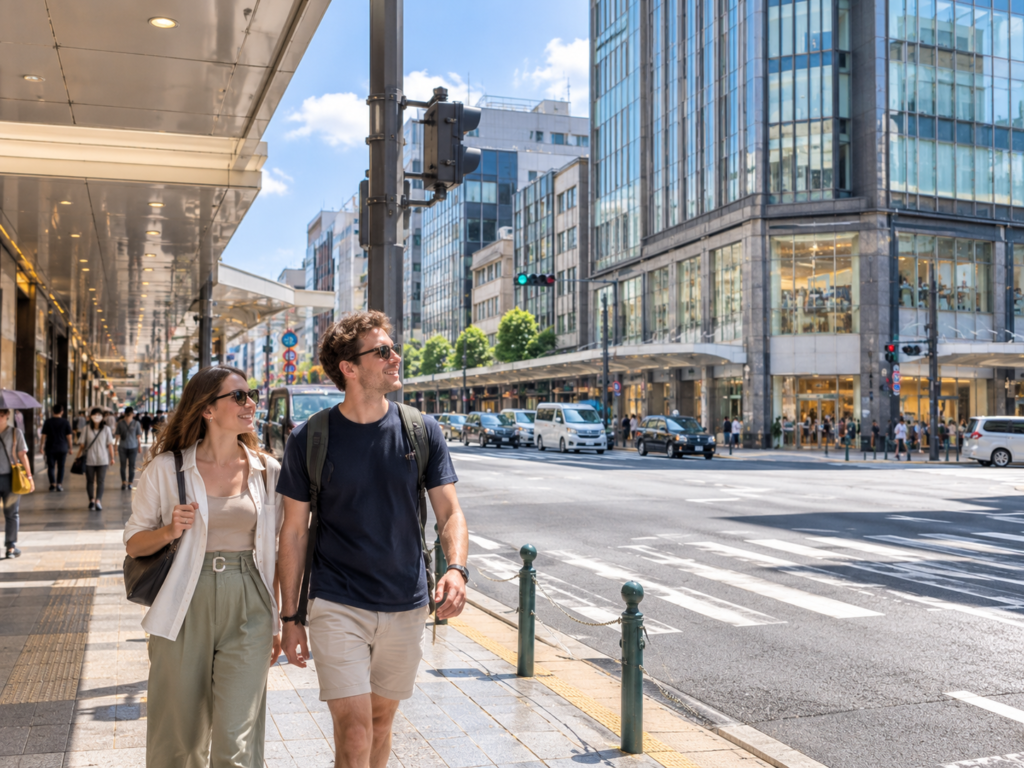
The streets around the Shijo-Karasuma intersection contain department stores, cafés, restaurants, offices and modern shopping complexes.
A few blocks away, you can find traditional streets, temples and historic buildings.
This contrast is one of the neighborhood’s defining characteristics. Modern city life and longstanding Japanese traditions exist close together, offering visitors a more varied impression of Kyoto.
A flexible destination in different weather
Karasuma is also practical when the weather is uncertain.
Shopping complexes, cafés and galleries provide indoor options, while a reserved tea ceremony can give the day a clear centerpiece.
You can enjoy the outdoor streets and temple grounds when the weather is pleasant, then adjust the rest of your route if it begins to rain.
Not every part of the neighborhood is covered, so an umbrella may still be necessary between destinations.
Best Things to Do Near Karasuma Station
1. Browse Japanese Lifestyle Shops at LAQUE Shijo Karasuma
LAQUE Shijo Karasuma is one of the easiest places to visit immediately after arriving at Karasuma Station.
The commercial complex is directly connected to exits 22 and 24 of Karasuma and Shijo stations. Its convenient location makes it suitable for starting or ending a sightseeing walk.
Inside, visitors can browse fashion, accessories, lifestyle goods and cafés without traveling far from the station.
For travelers interested in Japanese design, lifestyle shops can be especially rewarding. Rather than focusing only on conventional tourist souvenirs, you can look for practical items with a connection to contemporary Japanese craftsmanship.
The complex includes Nakagawa Masashichi Shoten, a well-known Japanese lifestyle brand offering household goods.
Depending on your interests, you might shop for small gifts, explore different styles of Japanese design or enjoy coffee before beginning your cultural activities.
Why visit?
LAQUE is a convenient choice for travelers who want a comfortable shopping stop near the station, particularly before a scheduled activity or during rainy weather.
Location: Directly connected to Karasuma and Shijo stations via exits 22 and 24.
Official website: https://laque.jp/
2. Explore Design, Food and Art at COCON KARASUMA
COCON KARASUMA is another shopping and cultural complex directly connected to the Shijo-Karasuma station area.
Located along Karasuma Street, the building brings together lifestyle stores, restaurants, cafés, galleries and a cinema.
Unlike a conventional souvenir shopping street, COCON KARASUMA places greater emphasis on design, creative culture and everyday urban life.
Visitors can browse furniture and interior design at ACTUS, discover incense and other lifestyle products, or stop for a meal.
The building also houses Kyoto Cinema and gallery spaces, offering alternatives to conventional sightseeing.
This combination makes COCON KARASUMA particularly suitable for travelers who enjoy creative environments and want to explore a more contemporary side of the city.
It can also be an effective place to take a break between walking and cultural activities.
Why visit?
COCON KARASUMA is ideal for visitors looking for design-oriented shopping, dining and indoor entertainment near the station.
Location: Connected to Hankyu Karasuma Station via exits 23 and 25, and accessible from Shijo Subway Station.
Official website: https://coconkarasuma.com/
Individual stores and facilities have different opening hours, so check the current listings before visiting.
3. Discover Contemporary Japanese Art at Kyoto Art Center
Kyoto Art Center offers an opportunity to experience the city’s creative culture in a distinctive historic setting.
Located about five minutes on foot from the Shijo-Karasuma station area, the center is dedicated to supporting and presenting artistic activities.
Its programming includes exhibitions, performances and other cultural projects.
The building was formerly an elementary school, giving visitors a chance to encounter older Kyoto architecture used for a contemporary purpose.
Rather than functioning simply as a collection of famous artworks, Kyoto Art Center acts as a space where creative projects and public cultural activities take place.
The exhibitions and events available during your visit will depend on the current program.
Even a short stop can provide a different perspective on Kyoto, especially for travelers who associate the city primarily with temples and traditional crafts.
General admission to the center is free, although some exhibitions, performances and events require payment.
Why visit?
Kyoto Art Center is a particularly interesting choice for art lovers, architecture enthusiasts and visitors seeking an indoor cultural activity.
Suggested visit: 30–60 minutes, depending on the exhibitions.
Official website: https://www.kac.or.jp/en/
Check the current event schedule before making a special trip, as individual programs and facilities may have different opening arrangements.
4. Visit Rokkakudo Temple, a Historic Landmark Near Karasuma
Rokkakudo Temple offers a quieter historical experience close to the busy commercial streets of central Kyoto.
Its official name is Chohoji Temple, although it is widely known as Rokkakudo, meaning “six-sided hall,” because of the distinctive shape of its main building.
According to temple tradition, it was founded by Prince Shotoku in 587.
Rokkakudo is also closely associated with ikebana, the Japanese art of flower arrangement.
The temple is regarded as a place connected with the origins of ikebana and the Ikenobo school, one of Japan’s most influential flower-arranging traditions.
This connection gives the temple cultural importance beyond its architecture and religious history.
While major Kyoto temples often require a substantial journey and a longer visit, Rokkakudo is relatively compact.
Its courtyard and traditional buildings provide an opportunity to appreciate Japanese Buddhist heritage without leaving the downtown area.
The atmosphere can feel noticeably different from the busy roads nearby.
Why visit?
Rokkakudo is a good choice for travelers interested in Japanese history, religion, architecture and traditional arts.
Access: Approximately five minutes on foot from exit 21 of Hankyu Karasuma Station.
Admission: Free to enter the temple grounds.
Visiting hours: 6:00 a.m.–5:00 p.m., according to the temple’s official visitor information.
Official website: https://www.ikenobo.jp/rokkakudo/
Remember that Rokkakudo is an active religious site. Speak quietly, respect worshippers and follow any posted photography guidance.
5. Experience a Traditional Tea Ceremony at Nishiki Orizuruya
For visitors who want to do more than shop and admire historic buildings, participating in a traditional cultural activity can be the highlight of a day near Karasuma Station.
Nishiki Orizuruya is located approximately six minutes on foot from Hankyu Karasuma Station and eight minutes from Shijo Subway Station.
The facility occupies a Kyoto machiya, or traditional townhouse, that is more than 100 years old.
The property is also known as the former Morgan residence, a building associated with Morgan Oyuki, a Kyoto geisha who became well known for her marriage into the Morgan family.
This historical background gives the setting a distinctive story, although the main attraction for visitors is the opportunity to engage directly with Japanese culture.
At Nishiki Orizuruya, international travelers can experience tea ceremony, Japanese calligraphy and other cultural activities.
Kimono dressing is included in the cultural experience courses.
That means visitors can enjoy the atmosphere of wearing traditional Japanese clothing while taking part in an activity, rather than treating the kimono solely as clothing for sightseeing photographs.
What happens during the tea ceremony experience?
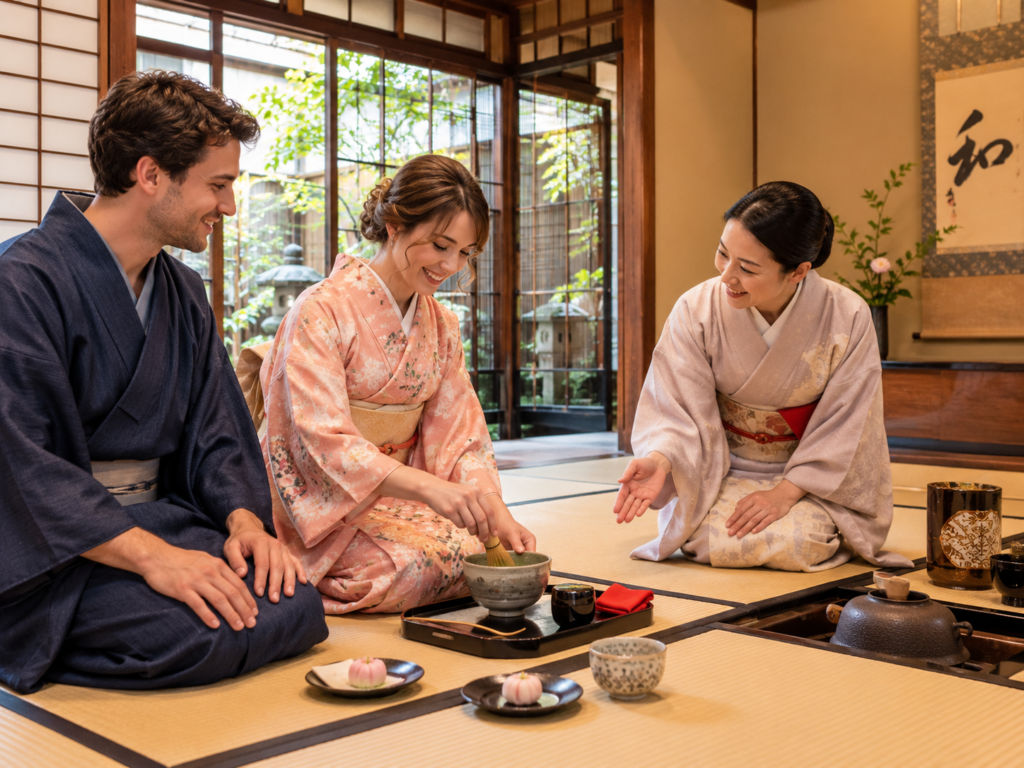
The tea ceremony course follows a structured introduction to Japanese tea culture.
First, guests select a kimono and receive assistance with dressing. Hair styling is also offered for female guests as part of the described experience.
Next, an instructor introduces the history and basic principles of the Japanese tea ceremony.
Guests then watch a demonstration of tea preparation before trying to prepare matcha themselves.
The experience concludes with enjoying the freshly prepared matcha alongside Japanese sweets.
For people who have never attended a tea ceremony, this hands-on format offers an approachable introduction.
It is not necessary to arrive already knowing how to handle a tea bowl or use a tea whisk. Staff guide participants through the experience.
Why choose a tea ceremony near Karasuma Station?
A traditional tea ceremony can provide a meaningful contrast to the shopping streets around Shijo-Karasuma.
After seeing Kyoto’s modern commercial atmosphere, visitors can enter a traditional townhouse and spend time learning about matcha, hospitality and Japanese aesthetics.
The activity is also easy to fit into a half-day itinerary because the venue is close to the station.
For travelers with limited time in Kyoto, this combination of accessibility and hands-on cultural learning is particularly attractive.
Explore a traditional Japanese experience during your Kyoto visit.
Nishiki Orizuruya’s Tea Ceremony Experience combines kimono dressing, an instructor-led introduction, a tea demonstration and hands-on matcha preparation.
View Tea Ceremony Details and Booking Information
Suggested Half-Day Itinerary from Karasuma Station
A good half-day plan balances sightseeing with sufficient time to enjoy each activity.
The following example begins at Karasuma Station and combines shopping, art, temple sightseeing and a tea ceremony.
All times are illustrative. They are not confirmed tour departure times, and you should arrange the itinerary around your actual reservation.
| Time | Suggested activity |
| 10:00 a.m. | Arrive at Karasuma Station and browse LAQUE Shijo Karasuma |
| 10:30 a.m. | Explore shops or enjoy a coffee at COCON KARASUMA |
| 11:15 a.m. | Visit Kyoto Art Center |
| 12:00 p.m. | Walk to Rokkakudo Temple |
| 12:30 p.m. | Lunch around Shijo-Karasuma and walk toward the experience venue |
| 1:00 p.m. | Begin a reserved tea ceremony experience at Nishiki Orizuruya |
| 2:30 p.m. | Finish the 90-minute experience and continue sightseeing |
Morning: Start with Shopping and Creative Culture
Begin at the station-connected shopping complexes.
This is a comfortable way to orient yourself, especially if you have arrived from another city or are unfamiliar with Kyoto’s street layout.
After browsing LAQUE and COCON KARASUMA, walk toward Kyoto Art Center.
If there is an exhibition that interests you, allow extra time. If the program does not match your preferences, use the time for a nearby café instead.
Midday: Explore Rokkakudo and Take a Lunch Break
Continue toward Rokkakudo Temple for a short visit.
The contrast between the surrounding office buildings and the historic temple makes this one of the area’s more interesting sightseeing experiences.
Afterward, return toward the Shijo-Karasuma shopping district or choose a restaurant along your route to Nishiki Orizuruya.
Avoid planning lunch too tightly before your cultural experience. Restaurant waiting times can vary, particularly on weekends and during busy travel seasons.
Afternoon: Finish with Kimono and Tea Ceremony
Reserve your cultural experience for a time that gives you enough flexibility earlier in the day.
At Nishiki Orizuruya, change into a kimono and take part in the traditional tea ceremony.
The current listed duration is 90 minutes, making it possible to experience traditional Japanese culture without committing an entire day.
Afterward, you can continue exploring downtown Kyoto or return to Karasuma Station.
This itinerary emphasizes the area around Karasuma Station rather than trying to include every major landmark in central Kyoto.
How to Choose the Best Activities for Your Schedule
Not every traveler needs the same itinerary. Your ideal route depends on how much time you have and what interests you most.
If You Have One or Two Hours
Focus on attractions immediately around the station.
LAQUE and COCON KARASUMA are practical for short visits because they are directly connected to the railway area.
You can browse shops, buy a small gift or relax at a café without making a complicated journey.
If you prefer history, replace shopping with a visit to Rokkakudo Temple.
A two-hour window is generally too short to combine multiple sightseeing stops comfortably with a 90-minute reserved experience.
If You Have Half a Day
Choose two or three nearby stops and one longer activity.
A combination of Kyoto Art Center, Rokkakudo and a tea ceremony provides a varied introduction to the neighborhood.
Alternatively, travelers who prioritize shopping may prefer LAQUE, COCON KARASUMA and a tea ceremony.
Avoid spending too much time traveling back and forth between places. A compact itinerary is one of the main advantages of staying in the Shijo-Karasuma area.
If It Is Raining
Prioritize indoor facilities and confirm your travel route.
LAQUE, COCON KARASUMA and many activities inside Kyoto Art Center offer shelter from the weather.
A pre-booked tea ceremony is another option because the main experience takes place indoors.
Rokkakudo, however, involves visiting outdoor temple grounds and may be less comfortable in heavy rain.
Remember that walking between buildings can still expose you to the weather, even when the activities themselves are indoors.
If You Prefer Traditional Japanese Culture
Choose the temple and a cultural workshop over additional shopping.
At Rokkakudo, you can learn about Buddhism and the history of ikebana. At Nishiki Orizuruya, you can discover tea ceremony practices through direct participation.
The two experiences offer complementary perspectives on Japanese tradition: one through a historic religious site and the other through an instructor-led cultural activity.
Tea Ceremony Prices and Experience Options Near Karasuma Station
Nishiki Orizuruya offers several cultural experience courses.
According to its current official website, the following plans are listed:
| Cultural experience | Listed price | Duration |
| Tea Ceremony Experience | ¥7,700 | 90 minutes |
| Japanese Calligraphy Experience | ¥7,700 | 90 minutes |
| Tea Ceremony + Calligraphy | ¥13,200 | 120 minutes |
| Tea Ceremony + Nishiki Market Walking Tour | ¥13,200 | 150 minutes |
Kimono dressing is included in the listed cultural experience courses.
For visitors primarily interested in preparing and enjoying matcha, the Tea Ceremony Experience is the most straightforward choice.
Travelers who want to try more than one traditional art may prefer the combined Tea Ceremony and Calligraphy course.
If you want an instructor-led cultural activity and an English-guided neighborhood walk, the Tea Ceremony and Nishiki Market Walking Tour is another option.
The listed prices and durations are based on the official website at the time of writing. Always confirm current availability, inclusions and reservation conditions before booking.
The venue is intended for international visitors. Its Japanese-language official information states that Japanese customers are not accepted, so mixed groups should confirm eligibility before making a reservation.
Getting to Karasuma Station and Nishiki Orizuruya
From Kyoto Station
Take the Kyoto Municipal Subway Karasuma Line to Shijo Station.
Shijo Subway Station connects with Hankyu Karasuma Station through an underground passage.
This route provides convenient access to the Shijo-Karasuma intersection without requiring a bus transfer.
From Osaka
Hankyu Railway provides access toward central Kyoto, including Karasuma Station.
The most suitable route will depend on your departure station and whether you are traveling by Hankyu, JR or another railway operator.
Check the current railway timetable and route options before traveling.
From Karasuma Station to Nishiki Orizuruya
According to the venue’s official access information:
- Hankyu Karasuma Station: approximately six minutes on foot
- Shijo Subway Station: approximately eight minutes on foot
- Hankyu Kyoto Kawaramachi Station: approximately eight minutes on foot
Address:
Nishiki Orizuruya
452 Jumonji-cho, Yanaginobanba-dori, south of Takoyakushi-dori, Nakagyo-ku, Kyoto 604-8121, Japan
Business hours: 9:30 a.m.–6:00 p.m., according to the current official website.
Before traveling, confirm the route to your specific reservation location, as the nearest station exit is not always the best choice for every visitor.
Practical Tips for Visiting Shijo-Karasuma
Book Timed Experiences Before Planning the Rest of Your Day
Shopping and neighborhood sightseeing are flexible, but a tea ceremony follows a reservation schedule.
Choose your experience time first and organize the surrounding activities around it.
Nishiki Orizuruya notes that late arrival may result in the experience not being provided.
Allow extra time for finding the location, using station exits and navigating unfamiliar streets.
Check Exhibition and Shopping Schedules
Kyoto Art Center, shopping facilities and individual stores operate on different schedules.
A shopping complex may remain accessible even when certain stores or galleries are closed.
Checking official schedules is particularly important if you are interested in a specific exhibition, performance or shop.
Wear Comfortable Shoes
Shijo-Karasuma is walkable, but you may spend several hours moving between streets, shops and attractions.
Comfortable footwear makes the experience more enjoyable, especially if you plan to continue sightseeing after your cultural activity.
Travel Light When Possible
Large suitcases can make narrow streets and crowded shopping areas difficult to navigate.
If you arrive with luggage, consider leaving large bags at your accommodation or using an appropriate luggage-storage facility.
Confirm the storage conditions beforehand rather than assuming every station exit or shop has lockers.
Respect Local Religious and Cultural Spaces
At temples, remember that you are entering places used for religious practice.
During a tea ceremony, follow the instructor’s guidance and treat the utensils and setting respectfully.
You do not need extensive prior knowledge. Paying attention, asking questions when appropriate and following local instructions are sufficient starting points.
Frequently Asked Questions About Karasuma Station
What are the best things to do near Karasuma Station in Kyoto?
Popular options include shopping at LAQUE Shijo Karasuma, exploring COCON KARASUMA, visiting Kyoto Art Center, seeing Rokkakudo Temple and participating in a traditional tea ceremony at Nishiki Orizuruya.
The best combination depends on whether you prefer shopping, art, history or hands-on cultural activities.
Is Karasuma Station the same as Shijo Station?
No. Karasuma Station is operated by Hankyu Railway, while Shijo Station belongs to the Kyoto Municipal Subway.
However, the two stations are connected by an underground passage, making transfers convenient.
Can I visit a temple near Karasuma Station?
Yes. Rokkakudo Temple is approximately five minutes on foot from exit 21 of Hankyu Karasuma Station.
The temple is known for its distinctive hexagonal main hall and its connection with the history of ikebana.
Can I experience a Japanese tea ceremony near Karasuma Station?
Yes. Nishiki Orizuruya is approximately six minutes on foot from Hankyu Karasuma Station.
Its tea ceremony course includes kimono dressing, an introduction to Japanese tea culture, a demonstration and the opportunity to prepare matcha.
The listed duration is 90 minutes.
Are there good rainy-day activities near Karasuma Station?
Yes. LAQUE and COCON KARASUMA offer indoor shopping and dining. Kyoto Art Center provides cultural programming and indoor spaces, subject to its schedule.
A reserved tea ceremony is another indoor option.
Is Shijo-Karasuma a convenient starting point for first-time Kyoto visitors?
Yes. Its railway connections and central location make it a practical area for travelers who want to combine sightseeing, shopping and cultural experiences.
It is especially useful if you prefer walking between nearby destinations instead of taking multiple buses.
How much does a tea ceremony near Karasuma Station cost?
Nishiki Orizuruya currently lists its Tea Ceremony Experience at ¥7,700 for 90 minutes, including kimono dressing.
Prices and booking conditions may change, so check the official experience page before making a reservation.
Explore More of Downtown Kyoto
Shijo-Karasuma also provides access to other attractions in central Kyoto.
If you have additional time, consider extending your walk toward Nishiki Market, a traditional shopping street known for Kyoto food culture and specialty shops.
For more information about cultural activities and nearby attractions, see these related guides:
- Best Cultural Experiences Near Nishiki Market in Kyoto
- Best Things to Do Near Nishiki Market in Kyoto
- Explore More Kyoto Travel Guides
If you visit Nishiki Market, remember that individual shops have different opening hours. The market also requests that visitors avoid eating while walking and enjoy purchased food in front of or inside the selling shop.
Experience the Best of Karasuma: Modern Kyoto and Traditional Culture
Karasuma Station is an excellent starting point for discovering a different side of Kyoto.
Within a walkable neighborhood, travelers can explore Japanese design, enjoy cafés, encounter contemporary art and visit a historic Buddhist temple.
Adding a traditional tea ceremony creates a more personal experience of the city.
Rather than only looking at historic buildings and traditional objects, you can wear a kimono, learn about Japanese hospitality and prepare matcha with guidance from an instructor.
At Nishiki Orizuruya, these experiences take place inside a historic Kyoto townhouse just a short walk from Karasuma Station.
If you want to combine convenient downtown sightseeing with an introduction to traditional Japanese culture, a tea ceremony can be a memorable part of your Kyoto itinerary.
Make your visit to Kyoto more than a sightseeing trip.
Discover kimono dressing and hands-on Japanese tea culture at Nishiki Orizuruya.